Determining fault in a car accident decides who holds legal and financial responsibility for the resulting harm. The finding of fault impacts every part of the case, from how an insurance company handles the claim to whether you recover compensation for medical expenses, lost income, or vehicle repairs.
In some cases, it may even affect whether a party faces legal liability in court. Without a clear assignment of fault, a car accident lawyer would find it difficult to resolve the claim or defend against one.
A fault is not determined based on who apologizes or who suffered the most damage. Instead, it’s a fact-based process guided by traffic laws, physical evidence, and the specific circumstances of the collision.
Investigators do not determine fault based on who apologizes at the scene or whose vehicle sustained the most damage. Instead, they follow a fact-based process, guided by traffic laws, physical evidence, and the specific circumstances of the collision.
Fast Facts: How to Determine Fault After a Crash
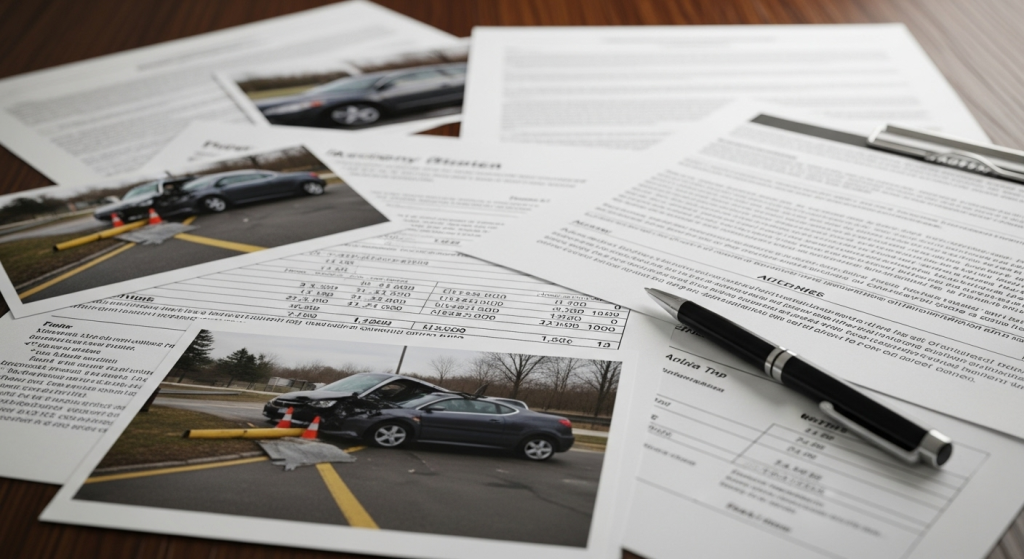
Insurance adjusters and legal professionals determine fault by evaluating several key pieces of evidence, including:
- Police Reports: An officer's official account of the accident, including diagrams and any citations issued.
- Traffic Laws: Which driver violated a rule of the road, such as failing to yield or speeding.
- Physical Evidence: The location and severity of vehicle damage, skid marks, and roadway debris.
- Video Footage: Recordings from dash cams, traffic cameras, or nearby security systems.
- Witness Statements: Accounts from neutral, third-party observers.
- Vehicle Data: Information from a car's "black box" or event data recorder (EDR).
What Are the Key Indicators of Fault?
Identifying who caused a car accident depends on the weight and clarity of available evidence. Insurers, attorneys, and courts commonly use the following indicators to evaluate liability. While no single factor is usually enough on its own, together, they build a framework for identifying fault with legal and factual support.
Traffic Violations
A driver's traffic violation often provides a strong starting point for assessing fault. A violation that directly precedes a collision holds particular relevance.
While a traffic citation does not create automatic liability, it serves as powerful evidence of negligence. For instance, if a police report states that a driver failed to yield the right of way, that information carries persuasive weight during the claims process.
The connection between a traffic violation and a crash must be established. It’s not enough that a driver broke a rule, but the violation must have contributed to the accident.
For example, a driver may be speeding but still not be at fault if they were hit by someone making an illegal left turn. Therefore, investigators must evaluate how the violation factored into the chain of events, whether it created an unreasonable risk, and whether that risk was realized in the collision.
Vehicle Damage Location
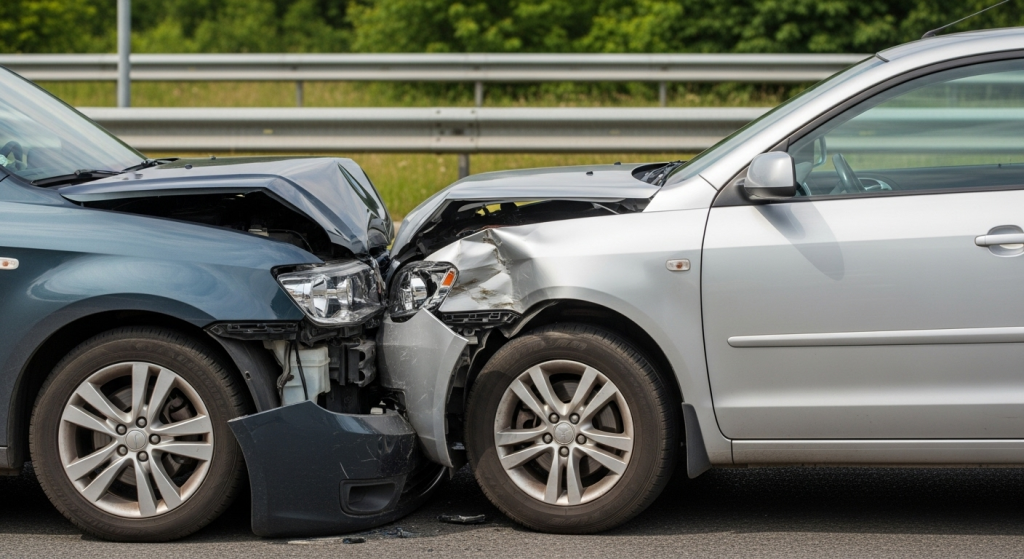
The area of damage on each vehicle can reveal much about how the accident occurred. For example, damage to the rear bumper of one car and the front end of another usually indicates a rear-end collision, which tends to place fault on the trailing driver.
Similarly, damage to the side of a vehicle may suggest a failure to yield or improper lane change by the other driver. Analyzing damage patterns helps reconstruct movements before impact and gives context to competing accounts.
Damage analysis becomes more important when both parties give conflicting stories or deny responsibility. Adjusters and attorneys may consult accident reconstruction specialists to match the damage locations to the laws of physics, vehicle speeds, and collision angles.
In some cases, a mismatch between alleged events and the damage pattern can discredit a driver’s version of events. It makes vehicle damage one of the most visually compelling indicators of fault.
Accident Scene Photos or Videos
Photographs and videos taken immediately after the accident can preserve the condition of the roadway, traffic signals, weather conditions, vehicle positions, and debris fields. These visual records can provide insights that no written report can fully capture. For instance, a photo showing one vehicle pushed into the intersection can indicate the force and direction of impact, which might support one driver’s claim that they had the right-of-way.
Photos also serve to freeze the accident scene in time, especially before any vehicles are moved or towed. If one driver claims they stopped at a red light but a photo shows skid marks leading into the intersection, the image may contradict their statement. In claims involving complex or multi-car collisions, scene documentation is invaluable for reconstructing how the crash unfolded and identifying whether multiple parties contributed to the incident.
Surveillance Footage
Video from nearby surveillance cameras, traffic cams, or dash cams can provide an unfiltered view of how the collision happened. Unlike witness statements, which can be inconsistent or incomplete, surveillance footage offers a real-time record of vehicle movements, signal changes, and driver behavior. These recordings are frequently decisive in determining fault, particularly in cases where liability is denied or heavily contested.
It is vital to secure surveillance footage quickly, as many systems overwrite data within days. Once obtained, footage may clarify who had the green light, whether one vehicle swerved into another lane, or whether a driver appeared distracted. Courts and insurers tend to give significant weight to video evidence due to its objectivity and reliability.
Witness Statements
Statements from unbiased third parties can fill gaps that neither driver’s version of events can address. Witnesses may have seen key details, such as which car ran the red light or whether a turn signal was activated. Their testimony can help establish a timeline, clarify traffic flow, and corroborate other forms of evidence.
The value of a witness’s statement depends on their vantage point, attentiveness, and consistency. If multiple witnesses describe the same sequence of events, their collective statements can strengthen your case against the other driver. In cases involving conflicting driver accounts, neutral witness statements can be one of the most decisive factors in assigning fault.
Police or Crash Reports
Law enforcement officers normally respond to the scene, gather information, and document their observations in a crash report. These reports may include the officer’s initial assessment of fault, any citations issued, driver and witness statements, and a collision diagram. While not legally binding, police reports are heavily relied upon by insurers when processing claims.
An officer’s opinion about who was at fault can carry weight, especially when supported by physical evidence or admissions made at the scene. For example, if the report notes that one driver admitted to falling asleep at the wheel, that detail can significantly impact the outcome of the claim. However, if no citation was issued or the report contains conflicting statements, investigators may need further investigations before fault can be determined.
Victim Injuries
The type, scope, and location of injuries sustained by drivers or passengers can provide clues about how the collision occurred. For example, a driver with a neck injury may support a rear-end collision claim, while side-impact injuries can align with a T-bone crash. These findings help investigators match physical trauma to the mechanics of the accident.
Injury timing is also relevant. Medical documentation showing that the car accident injuries were consistent with the collision, both in nature and timing, can validate your account and disprove claims that the injuries predated the accident. While injuries alone may not prove fault, they are a supporting factor in evaluating the credibility and consistency of your version of events.
Expert Analysis
When the cause of a crash is unclear or heavily disputed, you can bring in accident reconstruction experts to analyze the evidence. These professionals use engineering principles, crash data, vehicle specifications, and physical evidence to simulate how the crash occurred. Their findings provide clarity in complex cases, such as severe crashes with limited eyewitness testimony.
Expert reports are particularly useful in litigation or high-value insurance disputes. Judges and juries rely on these opinions to understand technical details that lay people might not grasp, such as vehicle trajectories, braking distances, and impact forces. If an expert concludes that one driver’s actions created an unavoidable hazard, their report becomes a cornerstone of the liability argument.
Vehicle Event Data Recorders (EDRs)
Many modern vehicles contain black box systems that record data in the seconds leading to a crash. These Event Data Recorders capture speed, acceleration, braking, steering input, and seatbelt use metrics. This data is especially valuable when both drivers claim they had the right-of-way or when one party denies speeding or abrupt braking.
Accessing EDR data usually requires consent or legal authorization, but once retrieved, it can provide a precise timeline of the vehicle’s behavior before the crash. For example, if a driver claimed they braked to avoid the crash but the data shows no braking occurred, that inconsistency can shift fault. EDRs are often used with expert analysis to reconstruct the collision with scientific accuracy.
Cell Phone Records and Social Media
If distraction is suspected, phone records can reveal whether a driver was texting, calling, or using data at the time of the crash. Proving phone use may support a claim that the driver failed to pay attention to the road, a common cause of rear-end and intersection collisions. While phone use alone doesn’t establish fault, it’s a factor that may strengthen a negligence claim.
Social media posts can also inadvertently disclose details about the accident. In some cases, a driver might admit fault in a post or share photos that contradict their official statements. Investigators may review social media accounts for posts made near the time of the accident. A casual comment such as “I didn’t see the other car” can be used as evidence to support a liability determination.
Why Determining Car Accident Fault Is Important
Fault is more than a legal label because it directly influences financial responsibility, insurance outcomes, and the ability of an injured party to recover compensation. Without a clear assignment of fault, resolving a car accident case becomes more difficult, and the parties involved may face delays, denied claims, or reduced settlements. That’s why determining who was responsible for causing the crash is one of the first and most important steps in the post-accident process.
For insurance companies, fault affects whose policy will cover the damages. If the other driver is clearly at fault, their liability insurance should pay for your medical bills, lost income, and vehicle repairs. However, the outcome changes significantly if the fault is unclear or shared. In comparative negligence states, your recovery may be reduced in proportion to your percentage of fault.
Legal liability is also tied to fault. When a crash causes significant injuries or results in a lawsuit, fault becomes the central issue in determining who may be held financially responsible in court. A finding of fault in litigation can lead to a judgment that requires one party to pay for the other’s losses, including future medical care, pain and suffering, and diminished earning capacity. The at-fault party may also face punitive damages in cases involving gross negligence or reckless behavior.
Beyond financial recovery, fault determinations can impact your driving record and insurance premiums. If you’re found at fault, your insurer may raise your rates, cancel your policy, or assign you to a high-risk category. A citation or documented at-fault crash may also affect your eligibility for certain driving jobs or commercial insurance coverage. That’s why, if you are involved in an accident, you need to work with a car accident attorney to protect your rights regarding fault evaluation.
Disputing Fault in a Car Accident Case

If you think you have been unfairly blamed for a car accident, an attorney can help challenge the fault determination and protect your right to compensation.
Insurance companies and police reports can get it wrong, especially when they overlook key evidence, or the other party gives a misleading account. A car accident lawyer can review the crash report, identify errors, and gather additional evidence to strengthen your position.
Your car accident attorney will examine all the available evidence to counter the determination. They can bring in accident reconstruction experts or subpoena phone records and black box data to clarify what happened. They may also challenge an insurance company’s decision, negotiate with adjusters, or request independent arbitration.
If the dispute cannot resolve through the claims process, your lawyer can file a personal injury lawsuit and present your case in court. Working with an attorney gives you a structured legal strategy backed by factual analysis and the tools to fight back effectively.
FAQs
What if the police report says I was at fault, but I disagree?
A police report contains an officer's opinion, but it does not legally assign fault. You have the right to challenge the report's conclusions.
An attorney can gather contradictory evidence, such as witness statements or video footage the officer may not have seen, to build a case that disputes the initial finding.
What happens if both drivers share some of the blame?
Most states use a "comparative negligence" system. Under this rule, a driver's financial recovery diminishes by their percentage of fault. In some states, you cannot recover any damages if your fault exceeds a certain threshold, often 50%.
Does accepting a payment from the other driver's insurance company mean I accept their fault determination?
Yes. Cashing a check or signing a release from an insurance company typically finalizes the claim. This action legally confirms your acceptance of their settlement offer and their assessment of fault. You waive your right to pursue further compensation for that accident.
Never accept a settlement without first understanding the full extent of your damages and your legal options.
Will my insurance rates go up if the other driver was 100% at fault?
Generally, your insurance premiums should not increase if the other driver holds complete responsibility for the accident. Your insurer pays nothing toward the claim; the at-fault driver's liability insurance covers your damages.
However, some insurance companies review your claims history, and frequent non-fault accidents might influence future rates in some cases.
Involved in a Car Accident and Unsure Who’s at Fault? Call a Car Accident Attorney
Determining liability can significantly affect your ability to recover compensation for injuries and losses. If you’re facing conflicting statements, unclear evidence, or pressure from an insurance company, seeking legal guidance is vital before proceeding.
A car accident attorney can preserve key evidence, evaluate fault under applicable law, and protect your rights throughout the claims process. Don’t leave the outcome of your case to chance—call a car accident lawyer today to get advice tailored to your situation.