After a hit-and-run accident in Florida, the primary source for covering your immediate injuries and damages is your own auto insurance policy. Under the state’s no-fault law, your mandatory Personal Injury Protection (PIP) coverage is designed to pay for a significant portion of your initial medical bills and lost wages, regardless of who caused the crash.
However, PIP benefits are capped and do not cover every expense or the full emotional and physical toll of the incident. For victims of a hit-and-run accident in Pembroke Pines, working with a skilled Pembroke Pines car accident lawyer is often essential, as securing full compensation may depend on other, less-known avenues.
First Steps to Take After Returning Home from a Hit-and-Run
Once you are safely home after receiving any immediate medical attention and speaking with law enforcement at the scene, the moments that follow are critical for protecting your rights. Taking a few organized steps can make a significant difference in your ability to seek compensation for a hit-and-run accident in Pembroke Pines.
- Write Down Everything You Remember: The details of the accident can fade quickly, especially after a traumatic event. As soon as you are able, write down or record a voice memo of everything you can recall. Include the time of day, the location (for example, on Flamingo Road near the mall), the weather conditions, and any details about the other vehicle, no matter how small. Did you catch a partial license plate number? Do you remember the car’s color, make, model, or any distinguishing features like a bumper sticker or a dent?
- Document Your Injuries and Expenses: Start a dedicated folder for everything related to the accident. Keep all doctor’s notes, hospital discharge papers, receipts for prescriptions, and any other medical documentation. Also, keep track of any days you miss from work and any communication you have with your employer about your absence.
- Notify Your Own Insurance Company: It is important to report the accident to your own auto insurance provider promptly. Be honest and stick to the facts you know for certain. Explain that it was a hit-and-run. This initial notification is a required step to begin the process of accessing your own policy’s benefits.
These initial actions create a foundation for your claim and help organize the information you will need as you move forward.
Understanding Florida’s No-Fault System and Your PIP Coverage
Florida is a “no-fault” auto insurance state. This means that regardless of who is at fault for an accident, your own insurance policy is the first source of payment for certain damages. This is made possible through a type of coverage that is mandatory for most Florida drivers: Personal Injury Protection, which is often called PIP.
According to Florida Statutes § 627.736, PIP coverage is designed to provide immediate financial relief for medical expenses and lost income. In a hit-and-run situation where the other driver is unknown, your PIP benefits are your first line of defense against mounting bills.
Your PIP coverage will typically pay for:
- Eighty percent of your initial medical bills for treatment that is deemed reasonable and necessary. This includes ambulance rides, hospital stays, doctor’s visits, and therapies.
- Sixty percent of your lost wages if your injuries prevent you from returning to work.
- A death benefit in the tragic event of a fatal accident.
It is critical to know that to receive these benefits, you must seek initial medical treatment within 14 days of the accident. PIP provides up to $10,000 in total benefits, which can be exhausted quickly, especially if your injuries are serious.
When PIP Isn't Enough: The Power of Uninsured Motorist Coverage
Since PIP has a $10,000 limit and does not cover things like pain, suffering, or emotional distress, many victims of serious accidents find that it falls short of covering their total losses. This is where a different type of coverage becomes incredibly valuable: Uninsured/Underinsured Motorist coverage, commonly known as UM.
UM coverage is an optional but highly recommended part of a Florida auto insurance policy. It is designed to protect you when you are injured by a driver who has no insurance or not enough insurance to cover your damages. In a hit-and-run, the fleeing driver is treated as an uninsured motorist.
If you have UM coverage on your policy, you can file a claim with your own insurance company to recover the damages you would have been entitled to seek from the at-fault driver, had they been identified.
UM coverage can help pay for a wide range of damages that PIP does not, such as:
- Medical bills that exceed your PIP limit.
- Future medical care, rehabilitation, or therapy costs.
- Lost wages beyond what PIP covers, as well as loss of future earning capacity.
- Compensation for pain, suffering, mental anguish, and loss of enjoyment of life.
This coverage essentially steps into the shoes of the driver who fled, providing a vital source of financial recovery that helps you piece your life back together.
What If I Don’t Have Uninsured Motorist Coverage?
Discovering you don’t have UM coverage after a hit-and-run can be disheartening, but it doesn't mean all hope is lost. There may be other potential sources of recovery to explore. For instance, you might have Medical Payments Coverage (MedPay), another optional insurance that helps with medical bills. Your personal health insurance can also be used to cover treatment costs, though you may be responsible for deductibles and copays.
Another possibility hinges on identifying the person who caused the accident. Even if weeks have passed, new information can come to light. This is why preserving all evidence and notes from the beginning is so important.
The Search for the Driver Who Fled
Finding the driver who hit you and left the scene can feel like an impossible task, but it happens more often than you might think. Law enforcement takes these cases seriously, as leaving the scene of an accident involving injury is a crime under Florida Statutes § 316.061. An investigation may already be underway, and a skilled legal team can also conduct a private investigation on your behalf.
Here are some ways a hit-and-run driver might be found:
- Eyewitnesses: Someone driving by, walking on the sidewalk, or sitting in a nearby cafe might have seen the accident and can provide a description of the car or driver.
- Surveillance Footage: Many businesses along major roads like Pines Boulevard or in shopping centers have exterior security cameras that may have captured the accident or the fleeing vehicle. Traffic cameras at intersections are another potential source.
- Auto Body Shop Reports: Repair shops are often on the lookout for vehicles with damage consistent with a recent accident. If a driver seeks repairs for front-end damage that matches your rear-end collision, it can be a significant lead.
If the driver is identified, you can then proceed with a personal injury claim against their Bodily Injury (BI) liability insurance. This opens up another critical path to getting the full compensation you need for your recovery.
How Is My Vehicle Damage Covered After a Hit-and-Run?
While your injuries are the primary concern, the damage to your car is also a major financial burden. It is important to understand that PIP and UM coverage are for your injuries, not for your vehicle repairs. So, who pays for the damage to your car?
The answer typically lies in another part of your own insurance policy: Collision Coverage.
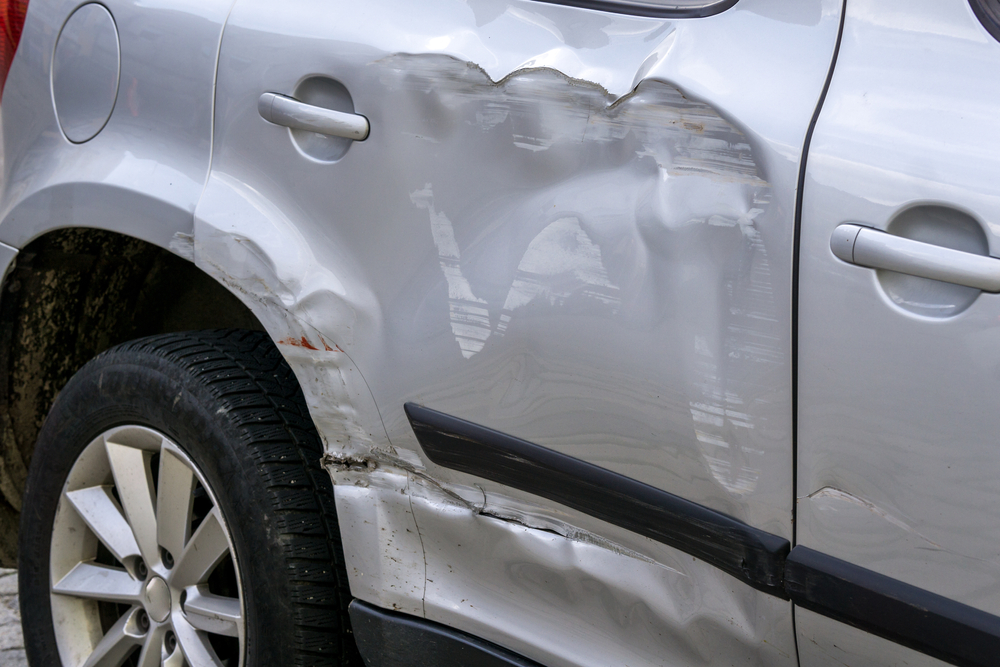
- Collision Coverage: This is optional insurance that pays to repair or replace your vehicle after a collision with another car or an object, regardless of fault. If you have this coverage, you can file a claim to get your car fixed. You will likely have to pay a deductible, which is the amount you pay out of pocket before your insurance benefits kick in.
- UM Property Damage: Some Uninsured Motorist policies include property damage coverage, but this is less common in Florida. It is important to review your specific policy documents to see if this is included.
- If You Don't Have Collision Coverage: Without collision coverage, your options are more limited. Your primary hope for getting your car repaired is to identify the at-fault driver and file a claim against their Property Damage (PD) liability insurance, which is mandatory in Florida.
Dealing with vehicle repairs adds another layer of stress, but understanding which part of your policy applies can help clarify the process.
Why a Caring Legal Advocate Can Be Your Strongest Ally
After a hit-and-run accident, you may feel like you are alone in a fight against a faceless insurance company, even if it’s your own. Insurance adjusters have a job to do, and that often involves minimizing the amount they pay out on claims. They may question the severity of your injuries or the necessity of your treatment. This is where having a dedicated personal injury lawyer can make all the difference.
A legal team focused on personal injury cases can help you by:
- Thoroughly Investigating Your Case: They can work to gather evidence that may help identify the at-fault driver, such as obtaining surveillance footage from businesses near the accident scene or interviewing witnesses the police may have missed.
- Managing All Insurance Communications: A lawyer can handle all the calls, paperwork, and negotiations with your insurance company. This frees you from the stress and allows you to focus on your medical treatment and recovery.
- Accurately Calculating Your Damages: They can work with medical and financial professionals to determine the full extent of your losses, including future medical needs and the long-term impact on your ability to work and enjoy life.
- Championing Your Rights: Whether negotiating for a fair settlement from your UM policy or pursuing a claim against a recently identified at-fault driver, a lawyer acts as your advocate, working to secure the full and fair compensation you are owed.
Having a knowledgeable professional on your side levels the playing field and provides you with the guidance and support needed to get through this challenging time.
FAQs: Who Pays for My Damages and Injuries in a Hit-and-Run Accident?
Here are answers to some other common questions that arise after a hit-and-run accident in Florida.
Will my insurance rates go up if I file a claim for a hit-and-run?
Under Florida law, an insurance company is generally not supposed to raise your rates for an accident that was not your fault. Since a hit-and-run is by definition not your fault, filing a PIP or UM claim should not negatively impact your premiums.
Is there a time limit for filing a hit-and-run accident claim in Florida?
Yes. This is known as the statute of limitations. In Florida, you generally have two years from the date of the accident to file a personal injury lawsuit based on negligence. For a UM claim, the time limit may be different and is often defined by the language in your insurance contract. It is vital to act promptly to protect your right to seek compensation.
What happens if the hit-and-run driver is found, but they don't have insurance?
This scenario is precisely what Uninsured Motorist (UM) coverage is for. If the driver is identified but is uninsured or underinsured, your UM coverage would still be the primary source for recovering damages beyond what your PIP covers. You would proceed with the claim through your own insurance company.
Contact a Trusted Legal Advocate Today

At Garnes Injury Law, we understand the physical, emotional, and financial weight accident victims carry, especially those involved in an accident by a hit-and-run driver. Led by Attorney Erika Garnes, our Pembroke Pines personal injury lawyers team provides personalized and compassionate representation to help you understand your options and pursue the justice you deserve. We are fluent in both English and Spanish and are dedicated to serving our diverse South Florida community.While you focus on healing, let us handle the legal process. Contact the team at Garnes Injury Law today at (954) 905-2683 or through our online form for a consultation to discuss your case and options for financial recovery.